Import or Manually enter Johnes results in BoviSync
1. Import Lab Results (Johnes) - DNJ File Only
This article is how to import as well as creating a .DNJ file. This is a standard file for importing Johnes results.
Written Instructions:
If you already have a .DNJ file and only need instructions on importing skip to step #4
1. Open Microsoft Excel and create a simple 3 column .CSV file as shown below:
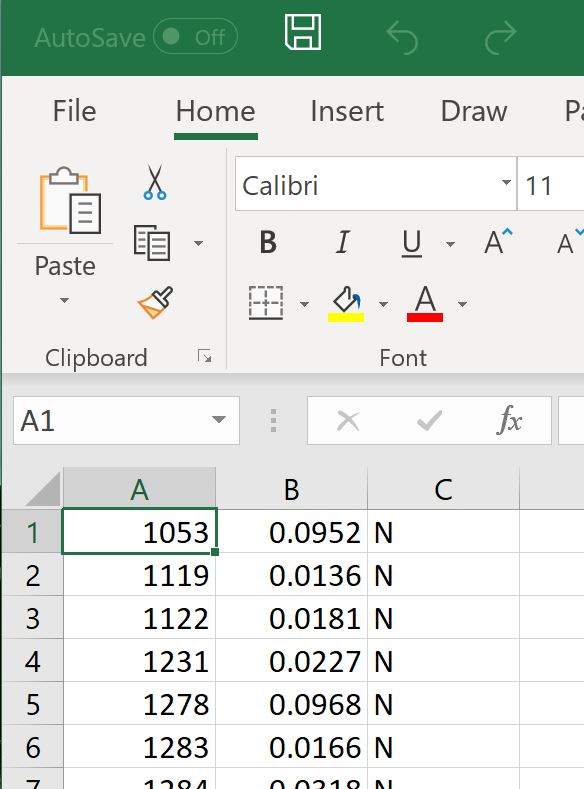
Column A: = Eartag Column B: = Result Column C: P (positive), N (negative) or S (Suspect).
2. After the file is done being created, save it as a .CSV file.
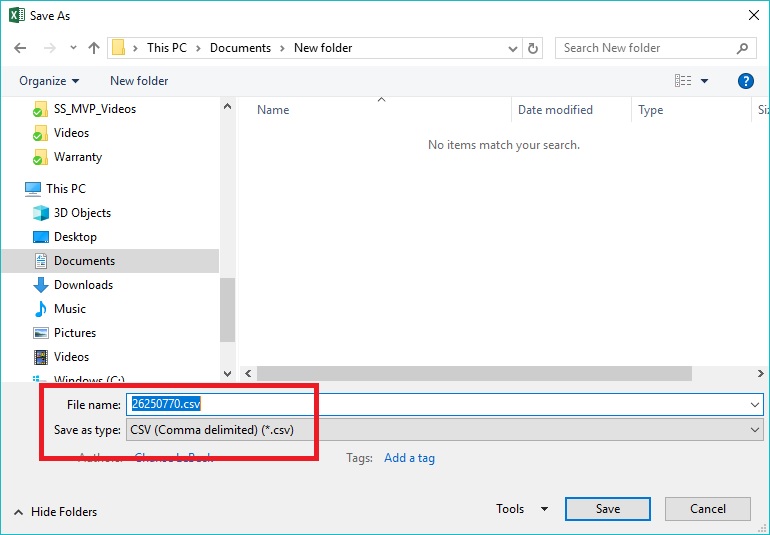
The file name MUST be the same as the herd code of the farm
The file name MUST be the same as the herd code of the farm
3. Change the file extension to be .DNJ (Right click the file > Rename)
Note: In this example, the file is changed to a .DNO file, but for Johnes results, the file must be a .DNJ

If the rename dialog box doesn't appear, see this article on how to turn that Windows feature on.
If the rename dialog box doesn't appear, see this article on how to turn that Windows feature on.
4. Import the .DNJ file into BoviSync: Click here to go to the Import Page
Make sure the file you're uploading is your herd code followed by .DNJ (file extension)
You have successfully imported Johnes results into BoviSync!
You can find an example file for the import attached to this article.
2. Manually enter Johnes results
As an alternative, you can also enter the Johnes results manually (usefull when you only need to update a few animals). To do this go to Enter > Events.
Then on the Animal field put the Animal IDs that you want to enter and on the event type select Highly-Inf-Dis.
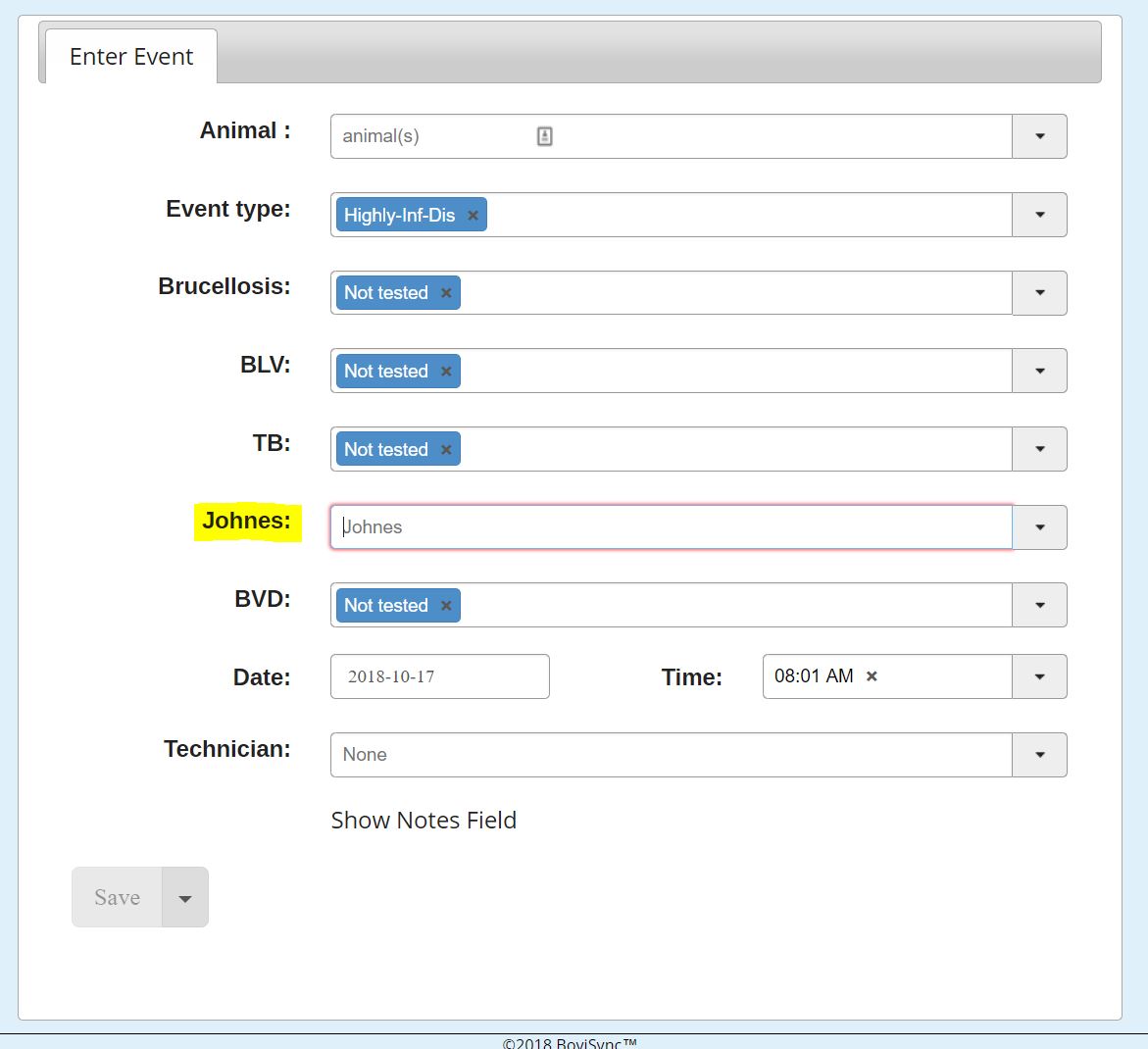
Then on the Johnes select Positive, Negative or suspect.
You will also need to select a technician and make sure the date is the correct one.
When all fields are filed just select Save.