Executive Summary
The
transition period is one of the most biologically and commercially demanding
phases of the lactation cycle. In just a few weeks, cows must move from late
gestation into early lactation while dry matter intake is falling, calcium
demand is rising sharply, and metabolic and immune pressures are increasing
[1,2,12]. When cows do not adapt well to that shift, the herd usually sees the
familiar cluster of fresh-cow problems: hypocalcaemia, hyperketonaemia,
displaced abomasum, uterine disease, mastitis, weaker early-lactation milk
production, suboptimum reproductive outcomes, and increased early-lactation
exits [1,2,5,13,14].
For that
reason, transition management is most effective when it focuses on the
conditions that help cows adapt successfully, rather than reacting to one or
more disorders at a time. In practice, that means protecting dry matter intake,
preparing cows for the calcium demands of lactation, limiting excessive
metabolic strain, and reducing the facility and social pressures that can make
adaptation harder [1,6,15].
The
commercial stakes are substantial. When transition performance is weak, losses
accumulate through treatment cost, milk loss, delayed conception, greater labour
demand, and early lactation exits [7,8,14,16]. When transition performance is
strong, herds typically see more stable fresh-cow performance, stronger week-4
milk, improved reproductive outcomes, and fewer costly disruptions during the
first weeks of lactation [8,14,17].
The
strongest transition programs consistently do a few things well: they stabilize
intake before and after calving, prepare cows for the calcium challenge at
parturition, limit excessive lipid mobilization and ketone burden, reduce
crowding and regrouping pressure, maintain access to feed, water, and cow
comfort, and monitor both direct biological indicators and early-lactation
health signals before visible case rates rise [1,3,5,7,9,15,18].
When used as a management system, BoviSync helps farms turn
those priorities into a repeatable operating process. Fresh-cow events, early milk
signals, pen scoring, group comparisons, and early-lactation removals can be
reviewed together rather than in isolation, making it easier to identify drift,
confirm likely causes, assign follow-up, and verify whether corrective action resulted
in positive outcomes.
The thresholds and operating targets used here are examples
drawn from published literature and field application. They are intended to
support herd interpretation and action, not to replace herd-specific context,
sampling design, or veterinary and nutritional judgment. A consolidated list of
example thresholds is provided in Appendix A.
Glossary of Key Terms
BHB
(Beta-hydroxybutyrate): A ketone body measured in blood, and sometimes
milk, as an indicator of fat mobilization and metabolic strain. Elevated BHB is
commonly used to identify cows or herds at risk of hyperketonemia and related
fresh-cow problems.
BCS (Body Condition
Score): A visual scoring system used to estimate body fat reserves. In
transition cows, overconditioning before calving can increase risk of excessive
fat mobilization and poorer metabolic adaptation.
BHBA: Another
abbreviation for beta-hydroxybutyrate. In practice, BHB and BHBA are often used
interchangeably in transition-cow discussions.
Close-up group: The
group of dry cows managed in the final period before calving, often the last 2
to 4 weeks prepartum. This is the main window for pre-fresh ration exposure and
preparation for calving.
DCAD (Dietary
Cation-Anion Difference): A ration formulation approach that adjusts the
balance of key positively and negatively charged minerals, especially in
close-up cows, to influence acid-base status and improve calcium readiness
before calving.
DIM (Days in Milk): The
number of days since calving. Measures such as 30 DIM or 60 DIM are often used
to track early-lactation health, production, and culling outcomes.
DMI (Dry Matter
Intake): The amount of feed a cow consumes excluding water content. DMI is
one of the most important practical indicators of transition success because
lower intake increases risk of metabolic and health problems.
Fresh cow: A cow
in the early post-calving period, typically the first days or weeks after
calving, when metabolic and health risks are highest.
Hyperketonemia: Elevated
ketone levels, usually assessed by BHB. It is commonly used as the herd- or
cow-level term for excessive ketone burden, whether or not obvious clinical
ketosis is present.
Hypocalcaemia: Lower-than-normal
blood calcium concentration around calving. It includes both clinical milk
fever and subclinical calcium deficiency that can affect intake, motility, and
disease risk.
LDA (Left Displaced
Abomasum): A disorder in which the abomasum shifts from its normal
position, usually during early lactation. It is commonly associated with
reduced intake, lower rumen fill, impaired motility, and transition stress.
MP (Metabolizable
Protein): The protein actually available to the cow after digestion and
microbial contribution, rather than just crude protein in the ration. It is
used in transition ration formulation to better align amino acid supply with
cow requirements.
NEFA (Non-esterified
Fatty Acids): Fatty acids released from body fat during tissue
mobilization. Elevated NEFA indicates that cows are drawing heavily on body
reserves, especially before or after calving.
Negative energy
balance: A state in which energy demand exceeds energy intake. This is
common in early lactation, but when excessive it contributes to fat
mobilization, ketone production, and poorer transition outcomes.
Parity: The
number of times a cow has calved. Transition risk often differs by parity, so
first-lactation animals and older cows should not always be assessed the same
way.
PTH (Parathyroid
Hormone): A hormone central to calcium regulation. Around calving,
effective response to PTH is essential for mobilizing calcium and maintaining
blood calcium levels.
SCC (Somatic Cell
Count): A measure of the number of somatic cells in milk, commonly used as
an indicator of udder health and mastitis risk.
Subclinical: A
condition that does not show obvious outward signs but is still measurable and
biologically important. Subclinical hypocalcaemia and subclinical
hyperketonemia can have major production and health consequences.
Transition period: The
biologically demanding period around calving, commonly defined as the final 3
weeks before calving through the first 3 weeks after calving. It is the period
when cows are most vulnerable to metabolic, health, and performance disruption.
Urine pH: A
practical field measure used to assess whether cows on a negative DCAD ration
are experiencing the intended acidogenic effect. It is a monitoring tool, not
the mechanism itself.
Week-4 milk: Average
daily milk yield during the fourth week of lactation. It is often used as an
early signal of how well cows have transitioned into lactation.
1. Why It Matters
The transition period is commonly defined as the final three
weeks before calving through the first three weeks after calving, and that
remains the most practical working definition for herd analysis [1,2]. In
biological terms, however, transition success is shaped by factors that begin
earlier in the dry period and can influence outcomes well beyond the first
postpartum month. Dry-period nutrition, body condition, heat and social stress,
mineral strategy, close-up design, and fresh-cow protocols all shape whether
cows adapt smoothly or lose the capacity to cope at the point of greatest
demand [1,2,6,15].
Transition disorders remain a challenge on many dairy farms.
Recent literature continues to describe metabolic and infectious disease during
the transition period as affecting roughly 30-50% of cows, and one widely cited
monitoring review estimated that approximately one-third of dairy cows
experience at least one clinical disease and more than half experience at least
one subclinical disorder within the first 90 days of lactation [1,33]. From a
management standpoint, transition performance matters because early instability
affects more than health. It also affects milk trajectory, fertility, labor
efficiency, and retention [3,7,8,10,14,16]. These outcomes are commercially
linked because they often arise from the same unstable adaptation.
Strong transition programs protect far more than fresh-cow
treatment rates. They protect downstream performance across the whole lactation
[8,14,17].
2. What Drives Failure
Fresh-cow disorders often cluster because the same cow is
dealing with lower intake, rising nutrient demand, calcium pressure, metabolic
strain, altered liver workload, and temporary immune vulnerability at the same
time [1,2,4,5,12,13].
That combination reduces the cow’s capacity to adapt.
Reduced intake deepens negative energy balance and increases fat mobilization.
Lower calcium status can impair smooth-muscle function and slow intake
recovery. Concurrent inflammation can suppress appetite and intensify metabolic
pressure [2,3,5,10,12].
The practical implication is straightforward: transition
management works best when it is organized around the few pressure points that
determine whether cows adapt cleanly. Those pressure points are intake
stability, calcium readiness, metabolic strain, immune resilience, facility
access, and early detection of drift.
3. Protecting Intake First
Dry matter intake typically begins to decline during the
last 10 days of gestation, with the steepest fall often occurring during the
final days before calving [1,3]. Intake rises again after calving, but usually
not fast enough to match the combined demands of maintenance and milk synthesis
[1,6].
For Holsteins, prepartum intake around 12-14 kg/day
(26-30lb), or roughly 1.8-2.0% of body weight, is a reasonable field target
when the goal is stable close-up intake. In the early fresh period, intake
should be rising sharply towards approximately 14-18 kg/day (30-40lb) as cows
recover after calving [6,18].
Intake targets should also be interpreted alongside ration
energy density. In the dry period, more energy is not a substitute for
suboptimum intakes. Controlled-energy dry-cow programs are commonly built
around relatively low-energy, high-fiber diets, often around 1.30 to 1.39 Mcal
NEL/kg of dry matter, to support adequate intake without materially overfeeding
energy before calving [6,30,31].
The practical goal is to identify herds in which intake
falls too sharply, vary too widely across the group, or remains slow to
recover. Those herds usually pay later through deeper negative energy balance,
excessive tissue mobilization, and less stable fresh-cow performance [3,6,10].
Behavioral change often reflects the same instability. In
parous cows, shorter rumination in the final prepartum week has been associated
with higher NEFA, higher BHB, greater inflammatory burden, lower milk
production, reduced pregnancy outcomes, and greater culling risk [11]. In that
study, a deviation of 53 minutes or more below the parity average had higher
risk and poorer subsequent outcomes [11].
Most transition failures begin with unstable or inadequate
intake, even if the eventual problem is recorded as something else.
4. Preparing for the Calcium Challenge
At calving, the mammary gland becomes an abrupt calcium
sink. In many cows, the systems responsible for calcium homeostasis under
non-lactating conditions cannot increase calcium availability fast enough to
support the onset of colostrum and milk production [4,5]. Hypocalcaemia should
therefore be viewed as a broader transition-system problem than clinical milk
fever alone.
Lower calcium status can contribute to poorer ruminal and
abomasal motility, weaker appetite recovery, greater susceptibility to retained
placenta and metritis, increased mastitis risk, and higher odds of displaced
abomasum [5,13]. Counting clinical cases of recumbent cows alone misses most of
the burden.
Prepartum mineral strategy is a major determinant of
transition success. High-potassium or strongly cationic prepartum diets reduce
effective tissue responsiveness to parathyroid hormone (PTH) and make calcium
regulation more likely to fail at calving [19]. Inadequate magnesium can
further impair responsiveness to PTH [20].
Where negative DCAD programs are used, they are best
understood as preventive acid-base strategies designed to improve calcium
responsiveness before calving [4,21]. Urine pH is a useful practical proxy only
when cows are actually consuming the acidogenic ration. Common field-operating
urine pH ranges are 5.5-6.5 for Holsteins and 5.8-6.3 for Jerseys [18].
At the herd level, total calcium in week +1 can be used to
interpret calcium status. A low prevalence of 35% or more of cows at 2.1 mmol/L
or lower has been associated with higher DA odds, while 15% or more at or below
that same threshold has been associated with milk loss [9].
Calcium binders such as synthetic zeolite A should be
treated as alternatives to negative DCAD rather than relabeled versions of it,
because their biology and trade-offs differ [22,23]. Where efficient and
accurate implementation of a DCAD strategy is difficult to execute, then
calcium binders as an alternative management of hypocalcemia should be
considered.
Oral calcium belongs in a separate category: it is
short-term support around calving for selected high-risk cows, not a
replacement for properly preparing cows before calving through an effective
pre-fresh mineral program [4,5].
As lactation begins, milk synthesis draws nutrients faster
than intake can recover. Some tissue mobilization is adaptive and expected, but
problems arise when intake remains too low, tissue mobilization becomes
excessive, and liver capacity is pressured by high NEFA flow and rising ketone
production [2,10,12]. Ketosis should therefore be viewed as a sign of broader
transition failure rather than an isolated feeding or testing issue, because it
commonly reflects the combined effects of inadequate intake, excessive fat
mobilization, inflammatory pressure, concurrent disease, and, in some cows,
calcium-related hypomotility [2,10,12,13].
Cow-level postpartum BHB thresholds around 10 mg/dL have
been used for disease prediction [7], and postpartum BHB at or above 1,200
umol/L in the first postpartum week has been associated with later LDA risk
[13]. Prepartum NEFA around 0.29 mEq/L has been associated with disease
prediction [7], while prepartum NEFA around 0.50 mEq/L sampled 4-10 days before
expected calving has been associated with later LDA risk [13].
At the herd level, seeing 15% or more of sampled close-up
cows above prepartum NEFA 0.27 mEq/L suggests excessive prepartum energy
strain. Seeing 15-20% or more of sampled fresh cows above postpartum BHB 10-12
mg/dL suggests excessive herd-level ketone burden [8]. A further useful signal
is 25% or more of cows with BHB at or above 1,400 umol/L in week +1, which has
been associated with higher DA odds [9].
Ketosis and DA often cluster because the same prerequisites
support both. Reduced intake lowers rumen fill. Lower calcium status reduces
motility. Inflammation and concurrent disease suppress intake further
[10,12,13].
6. Why Fresh-Cow Problems Cluster
Transition cows are temporarily less immunologically
resilient. Around calving, neutrophil function, lymphocyte responsiveness,
oxidative balance, and inflammatory regulation are all under pressure [2,12].
This is one reason retained placenta, metritis, mastitis, hypocalcaemia, and
ketosis tend to cluster rather than occur as cleanly separated categories
[2,5,12,14].
Reduced intake constrains nutrient supply to immune cells.
Calcium availability matters for immune-cell activation. Elevated NEFA and BHB
can impair aspects of immune function [5,12]. Inflammation can then suppress
appetite and worsen metabolic pressure further.
Operationally, better transition immunity should be treated
as a management outcome, not just a treatment issue.
7. The On-Farm Levers That Matter Most
7.1 Controlled-Energy Dry-Cow Feeding and Body Condition
The dry
period is where many of the conditions for transition success or failure are
established. Controlled energy during the dry period remains one of the
strongest nutritional principles because overfeeding energy prepartum increases
fat accumulation in the liver post calving, worsens metabolic adaptation, and
raises the frequency of ketosis and DA [6,10].
In
practice, controlled-energy dry-cow diets are commonly formulated as relatively
low-energy, high-fibre rations, often around 1.30 to 1.39 Mcal NEL/kg of dry
matter, with the goal of meeting rather than materially exceeding prepartum
energy requirements [6,30,31].
Body
condition should be managed with the same discipline as ration energy density.
Cows that have excess BCS at dry-off or that gain excessive condition during
the dry period, are more prone to lower postpartum intake, greater fat
mobilization, and poorer transition outcomes. The “high fertility cycle” work
from Fricke and colleagues describes better subsequent performance in cows that
dry off and calve at a lower body condition score, around 2.75 to 3.0, because
they gain less condition during late lactation and lose less after calving
[33]. For practical herd management, the aim should be to avoid unnecessary
condition gain during the dry period and to keep cows within a sensible calving
BCS range rather than allowing over conditioning to develop [33,34].
7.2 Protein, Amino Acids, and Liver Support
Transition cows face negative protein balance as well as
negative energy balance. Close-up protein strategy should therefore focus on
metabolizable protein (MP) supply and amino acid balance, not crude protein
alone. Recent Cornell-led work has evaluated close-up MP supplies ranging from
about 1,175 g/day to 1,603 g/day, while a practical close-up reference point is
often around 1,300 g/day, depending on intake and ration design [24,25].In
practical formulation, the goal is to provide enough MP to support adaptation
and early-lactation performance without treating crude protein as the primary
target. Amino acid guides commonly used alongside this approach include lysine
at 6.6-7.0% of MP, methionine at 2.2-2.4% of MP, and a Lys:Met ratio of about
2.7-3.0:1 [6,18].
Choline belongs in the same discussion because its
transition value is primarily hepatic. In practice, the focus is on
rumen-protected choline, because most dietary choline is degraded in the rumen
before it can be absorbed. Choline supports phosphatidylcholine synthesis and
export of triglyceride from the liver, which is why it is best positioned as a
liver-support and methyl-donor strategy during the transition period rather
than as a generic additive. Meta-analysis in parous transition cows has associated
rumen-protected choline supplementation with improved milk, energy-corrected
milk, fat, and protein yield, although effects on individual health disorders
have been less consistent [26,27].
7.3 Dry Period, Close-Up Design and Time in Group
For most herds, a total dry period of about 45 to 60 days
remains a sound practical target. Shorter total dry periods can improve aspects
of energy balance but may reduce subsequent milk yield, while excessively long
dry periods are also associated with poorer efficiency. At herd level, the most
defensible starting point remains a conventional dry period in the 50- 60-day
range, with shorter or individualized strategies used only when the farm is
managing them deliberately [35, 36].
If a separate close-up group is used, it should be managed
as a defined prepartum management period, not simply as a place to hold cows
before calving. Cohort evidence supports roughly 21-28 days in close-up as the
most favorable exposure band, while both abbreviated and prolonged residence
have been associated with poorer milk, health, reproductive, and culling
outcomes [15,28].
7.4 Facility Pressure, Access, and Competition
Facilities are not separate from transition biology. They
shape whether cows can express normal intake, lying, drinking, rumination, and
recovery behavior [15,18,28].
Practical field targets commonly include close-up and
fresh-group stocking at or below 100%, preferably 80–90% in high-risk groups;
approximately 76 cm bunk space per Holstein and 61 cm per Jersey; and, If
headlocks are used, there should be enough locking spaces that fresh-cow
examination and treatment do not create extra crowding or disrupt normal access
to feed, water, and resting space [18].
Water access should be reviewed with the same seriousness as
feed access in close-up and fresh pens. Practical guidance suggests about 4
linear inches of water space per cow, or at least 3.5 linear inches of
accessible perimeter per cow across two or more watering locations per group,
with enough surrounding alley space to avoid congestion [37,38]. In practical
terms, water availability is not just about trough size. It also depends on
placement, cow flow, and whether timid or subordinate cows can drink without
excessive competition, especially in high-risk close-up and fresh groups.
7.5 Breed and Parity Stratification
Transition risk is not distributed evenly across breed or
parity. Jerseys carry greater risk of both clinical and subclinical
hypocalcaemia and warrant breed-specific mineral programs. [4,5,20].
Primiparous animals should also be considered separately from older cows
wherever possible. Research has shown that primiparous cows in mixed-parity
transition groups experience more competition and different feeding and lying
behavior than multiparous cows, which helps explain why heifers can
underperform when parity groups are mixed. In practice, close-up and fresh-cow
management should take parity into account, and where facilities allow,
separating primiparous and multiparous animals is often preferable, especially
under higher stocking density or greater regrouping pressure [15,39,40,41].
BoviSync is most useful in transition management when report
review follows a disciplined hierarchy approach. First determine whether the
pattern looks like a fresh-cow health issue, a group-level nutrition or
stocking issue, a close-up or fresh-pen management issue, or a repeat failure
in monitoring and follow-up. Then use the relevant event summaries, milk
indicators, scoring trends, and group comparisons to narrow the likely cause
before changing protocols or retraining the team.
Transition performance should be managed as a repeatable
review process rather than as a collection of isolated incidents. The value of
BoviSync is not that it replaces blood sampling, urine pH measurement,
veterinary diagnosis, or ration formulation. Its value is that it helps farms
organize the signals that matter most, identify drift earlier, compare parity, pens
and periods consistently, and confirm whether corrective actions had a positive
effect.
For managers, the practical goal is to move from reaction to
control. A transition review should answer a short list of questions every
week:
- Are cows recovering intake, rumination and milk production
as expected?
- Is one pen, parity group, or time period
performing worse than the rest?
- Are disease events clustering?
- Are removals rising in the first 30 and 60 DIM?
- Are cow-condition and pen scores improving or
deteriorating alongside other metrics?
Used this way, BoviSync becomes a practical management
system for transition performance, not just another place to store records.
Good-looking numbers can still mislead if the
data-generation, or recording process, changed. Before drawing conclusions,
screen for missing fresh-cow events, inconsistent treatment entry, wrong-pen
cows, delayed milk-recording import, inconsistent scoring practices, or KPI
definitions that changed mid-trend. A simple management rule applies: if the
data-generation process changed, re-validate the trend before you interpret the
people.
High-value BoviSync reports and views for transition management
|
Report or view
|
What it helps answer
|
How to use it
|
|
Transition
Disease Report Card Report - BoviSync
|
Are disease events clustering by pen, parity, or week?
|
Review weekly to identify repeat patterns rather than
one-off cases
|
|
Transition
Report Card Report - BoviSync
|
Is one close-up or fresh group underperforming?
|
Compare pens, parity groups, or time periods before
changing protocols
|
|
Pen
Scoring Past30days Report - BoviSync
|
Are physical outcomes improving or worsening over time?
|
Use alongside health events and milk signals to confirm
whether changes held
|
|
Milk
week 4 trends Report - BoviSync
|
Are cows establishing expected milk momentum?
|
Review week-4 milk, first-test butterfat, second-test milk
protein, and first-test SCC together
|
|
Transition
Report Card Report - BoviSync
|
Are removals rising in the first 30 or 60 DIM?
|
Review by cause, parity, pen, and date range
|
|
Transition
Health Events in the Past 60 Days Report - BoviSync
|
Which cows or pens deserve immediate review?
|
Use for prompt investigation, not as a substitute for
examination
|
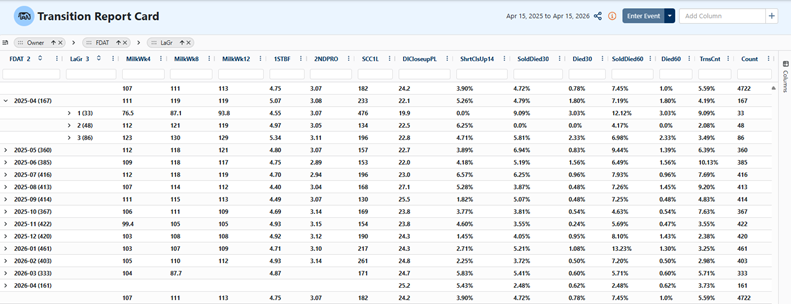
This BoviSync global report has
been adapted to include alternative report items. It combines key transition
milk and outcome indicators in a single view, including first-test fat,
second-test milk protein, first-test SCC, short close-up duration, sold or died
by 30 and 60 days, overall transition disease incidence, and week 4, 8, and 12
milk. The report is grouped by month of fresh, and when the monthly fresh
cohort is expanded to show lactation group, it allows managers to compare
transition performance by cohort and parity while keeping the count for each
fresh group visible. This is a useful example of how the BoviSync reporting
environment can adapt standard global reports to fit customer-specific
monitoring needs.
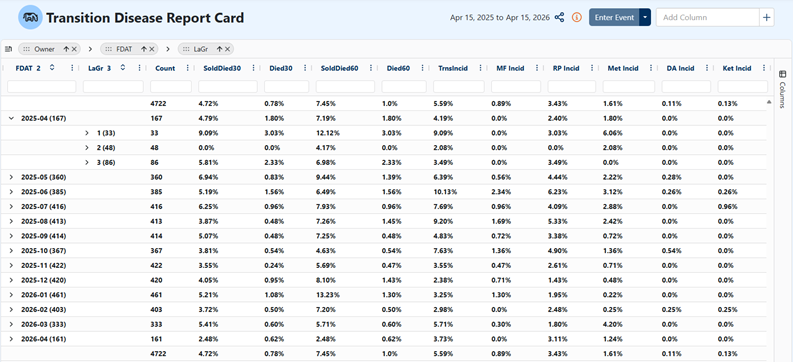
This companion disease-focused
report summarizes transition event incidence and early-lactation exits by month
of fresh and lactation group. It helps identify whether key disorders and sold
or died rates are clustering in specific fresh cohorts or parity groups, and
whether those patterns align with the milk and outcome signals shown in Fig 1.
.
This BoviSync global report groups cows into
days-in-close-up buckets and summarizes key outcome measures for each bucket,
including close-up period length, week-4 milk, peak milk, first-test fat ratio,
first-test SCC Log (target <4), transition incidence, sold or died rate, and
305-day milk. It helps show whether cows are entering the close-up pen within
the intended window and whether very short or prolonged close-up residence is
associated with weaker performance or higher transition risk. Because BoviSync
can support farm-specific close-up movement protocols through the app, this
report is also useful for checking compliance and reviewing downstream effects
over time.
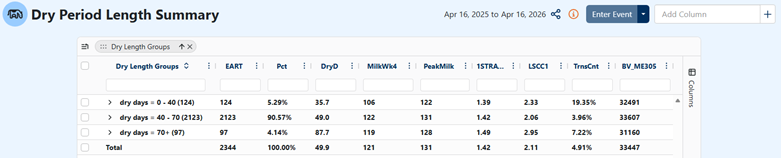
This BoviSync global report groups cows into
dry-period-length buckets and summarizes key outcome measures for each dry
period bucket, including average days, as per the close-up length summary. It
helps show whether dry-period management is staying within target and whether
shortened or prolonged dry periods are being reflected in early-lactation
performance, transition disease incidence, increased first test cell count, and
longer-term production outcomes.
How to interpret common transition patterns
|
Pattern in the data
|
Most likely interpretation
|
Best next step
|
|
Rising hyperketonemia with weaker week-4 milk
|
Intake recovery or metabolic adaptation is drifting
|
Review close-up intake, fresh-group pressure, concurrent
disease, and follow-up consistency
|
|
High calcium burden with more DA or weak early milk
|
Calcium readiness may be inadequate
|
Review prepartum mineral strategy, urine pH monitoring,
parity mix, and close-up ration exposure
|
|
One fresh pen underperforming others
|
Group-specific environment or execution issue
|
Check stocking pressure, bunk access, water access,
regrouping, and fresh-cow observation discipline
|
|
More early exits without an obvious disease spike
|
Losses may be accumulating through weak adaptation rather
than one diagnosis
|
Review milk indicators, treatment lag, scoring trends, and
cause coding
|
|
Worsening pen scores with drifting performance
|
The cows and the reports are telling the same story
|
Confirm the cause in the pen, then verify whether the
intervention holds
|
Manager takeaway
Do not separate cow-based scoring from transition analysis.
If one pen shows weaker milk momentum, more fresh-cow health events, and
worsening scores in the same window, that is a management finding, not three
unrelated data points.
9. What to Watch Weekly
The most useful monitoring systems combine direct biological
measures with early-lactation herd signals. One tells you what is happening
inside the cow. The other tells you how that biology is showing up in
performance.
Useful direct measures include urine pH when cows are
actually consuming an acidogenic ration, serum NEFA, blood or serum BHB, serum
calcium, and changes in rumination or activity [7-9,11,18,29].
Useful herd-level performance indicators include week-4
milk, first-test butterfat, second-test milk protein, first-test SCC,
hyperketonemia prevalence, DA rate, retained placenta burden, uterine disease
burden, and 60-DIM exits [14,16,17].
Cook and Green showed that higher week-4 milk and higher
early protein percentage were positively associated with conception, while
higher first-test butterfat and higher SCC in the first two early windows were
negatively associated with conception [17]. Their favorable predictive profile
used week-4 milk above 30 kg with early protein above 3.2%, while a poorer
profile used week-4 milk below 25 kg with early protein below 3.0% [17].
A practical epidemiologic high first-test SCC category
remains 200,000 cells/mL or greater (SCC Log 4) at the first milk recording
after calving [32]. Early-lactation exits should be interpreted carefully. One
published herd-level study identified postpartum culling at 13.3% or greater by
60 DIM as a high-culling herd level [14], but many field programs use tighter
practical benchmarks. Penn State Extension recommends a benchmark of <4%
removal during the first 30 DIM and <6% by 60 DIM, with higher rates suggesting
fresh-cow health and transition-management problems [34].
For a consolidated list of example operating targets and
herd action thresholds, see Appendix A.
10. Suggested Review Cadence
A simple review cadence makes transition management more
consistent and more coachable. The same operating model used in daily, weekly,
and monthly review rhythms for parlor management also works well here.
|
Cadence
|
Review items
|
Purpose
|
|
Daily
|
Fresh-cow checks, major disease events, cows needing
follow-up, rumination and health alert exceptions
|
Catch acute drift before it becomes a group-level problem
|
|
Weekly
|
Fresh-cow event review, pen scoring trends, week-4 milk,
first-test fat/protein/SCC, hyperketonemia burden, calcium burden where
sampled, repeat event patterns, pen level deviations for rumination and
intake, close-up pen absentees, urine pH (DCAD)
|
Separate one-off noise from repeatable transition failure
|
|
Monthly
|
Group trend reporting, close-up occupancy, fresh-group
stocking pressure, early-lactation exits, parity comparisons, whether prior
interventions held, late lactation/dry and fresh cow BCS
|
Confirm whether process control is improving physical
outcomes and herd performance
|
|
After any change
|
Before/after comparison of health events, milk indicators,
scoring, and exits
|
Validate that the intervention actually worked
|
Use the same KPI stack every time. Review by date first,
then by pen or parity group, then by event type or outcome. This makes it
easier to decide whether the issue is herd-wide, group-specific,
period-specific, parity-specific, or follow-up-specific.
Management questions BoviSync reporting can help answer
include whether one fresh pen is consistently weaker early lactation milk
production metrics or higher in first-test SCC than the others; whether
hyperketonemia, DA, or uterine disease is clustering in one parity group or one
time period; whether early-lactation exits are rising without an obvious
increase in recorded disease; and whether the same indicators improve over time
and stay improved after staff retraining and engagement, stocking density changes,
or ration changes.
11. Take Home
Transition cow management is most successful when it focuses
on helping cows cope with the demands of calving and early lactation, rather
than reacting to clinical disease events as they occur. When intake is
unstable, cows are not adequately prepared for the calcium demands of
lactation, close-up and fresh-group pressure is too high, or warning signs are
missed, or ignored, the result is usually not one disease in isolation but the
familiar cluster of fresh-cow problems: milk fever, ketosis, displaced abomasum,
uterine disease, mastitis pressure, poor early milk production, poorer
fertility, and more early exits [1,2,4,5,7-9,12-17].The strongest transition
programs therefore focus on the few things that matter most:
- Stable and appropriate intakes
- Quality pre-fresh mineral and nutritional program
- Timely dry and close-up entry
- Limit stocking and social pressure and maximize
cow-comfort
- Use monitoring systems that pick up potential problems
and protocol drift early enough to act
BoviSync helps turn transition
management from collecting a retrospective set of records, events and outcomes into
a proactive consistent review-and-action process, so farms can spot drift
earlier, follow up exceptions properly, and confirm whether changes are improving
results over time.
Appendix A. Example Operating Targets and Herd Action Thresholds
|
Area
|
Example target or threshold
|
Interpretation
|
|
Dry period length
|
50-60 days
|
Most favorable exposure band
|
|
Close-up duration
|
21-28 days
|
Most favorable exposure band
|
|
Close-up/fresh stocking density
|
100% or less; 80-90% preferred in high-risk groups
|
Reduces pressure on access and recovery
|
|
Bunk space, Holsteins
|
76 cm (30 inches)
|
Practical field target
|
|
Bunk space, Jerseys
|
61 cm (24 inches)
|
Practical field target
|
|
Water availability
|
4 linear inches (10 cm)/head
|
Practical transition-cow field benchmark
|
|
Water vessel perimeter
|
3.5 linear inches (3.8 cm)/cow; at least 2 locations/group
|
Facility-design guidance to reduce competition
|
|
DA rate
|
4.0% or higher
|
Herd disease trigger
|
|
Retained placenta
|
4.9% or higher
|
Herd disease trigger
|
|
Purulent vaginal discharge
|
5.0% or higher
|
Herd disease trigger
|
|
Cytological endometritis
|
18.8% or higher
|
Herd disease trigger
|
|
Leukocyte esterase endometritis
|
35.3% or higher
|
Herd disease trigger
|
|
Hyperketonemia
|
11.8% or higher
|
Associated with poorer first-service success
|
|
Hyperketonemia
|
23.1% or higher
|
Associated with higher 60-DIM culling
|
|
First-test SCC
|
200,000 cells/mL or greater
|
Practical high-risk category
|
|
Week-4 milk
|
Above 30 kg with protein above 3.2%
|
Favorable predictive profile
|
|
Week-4 milk
|
Below 25 kg with protein below 3.0%
|
Poorer predictive profile
|
|
Early-lactation removals, 0-30 DIM
|
<4%
|
Practical field benchmark
|
|
Early-lactation removals, 0-60 DIM
|
<6%
|
Practical field benchmark
|
|
Prepartum DMI, large Holsteins
|
12-14 kg (26-30lb)/day
|
Operating target for stable close-up intake
|
|
Prepartum DMI
|
1.8-2.0% of body weight
|
Useful field benchmark
|
|
Dry-cow ration energy density
|
1.30-1.39 Mcal NEL/kg DM
|
Example controlled-energy range
|
|
BCS at dry-off
|
3.25-3.5
|
Practical field target; avoid over-conditioning before the
dry period
|
|
BCS at calving
|
3.25-3.5
|
Practical field target; avoid cows calving too fat
|
|
BCS loss by 30 DIM
|
No more than 0.5
|
Larger losses suggest excessive negative energy balance
and transition risk
|
|
Early fresh DMI
|
14-18 kg (30-40lb)/day
|
Indicates recovery after calving
|
|
Rumination deviation, parous cows
|
53 min or more below parity average
|
Signals elevated transition strain
|
|
Urine pH, Holsteins on negative DCAD
|
5.5-6.5
|
Practical acidogenic exposure range
|
|
Urine pH, Jerseys on negative DCAD
|
5.8-6.3
|
Practical acidogenic exposure range
|
|
Prepartum NEFA, cow-level
|
0.29 mEq/L
|
Disease prediction example
|
|
Prepartum NEFA, 4-10 d prepartum
|
0.50 mEq/L
|
Associated with later LDA risk
|
|
Postpartum BHB, cow-level
|
10 mg/dL
|
Disease prediction example
|
|
Postpartum BHB, week +1
|
1,200 umol/L
|
Associated with later LDA risk
|
|
Week +1 total calcium
|
2.1 mmol/L or lower
|
Herd calcium burden indicator
|
|
Herd prepartum NEFA alarm
|
15% or more above 0.27 mEq/L
|
Suggests excessive prepartum strain
|
|
Herd postpartum BHB alarm
|
15-20% or more above 10-12 mg/dL
|
Suggests excessive herd ketone burden
|
|
Herd postpartum NEFA alarm
|
15% or more above 0.60-0.70 mEq/L
|
Signals elevated fresh-cow strain
|
|
Herd week +1 BHB burden
|
25% or more at 1,400 umol/L or higher
|
Associated with greater DA odds
|
|
Herd week +1 calcium burden
|
35% or more at 2.1 mmol/L or lower
|
Associated with greater DA odds
|
|
Herd week +1 calcium burden
|
15% or more at 2.1 mmol/L or lower
|
Associated with milk loss
|
References
1. Caixeta
LS, Omontese BO. Monitoring and improving the metabolic health of dairy cows
during the transition period. Animals (Basel). 2021;11:352.
2. Mezzetti
M, Cattaneo L, Passamonti MM, Lopreiato V, Minuti A, Trevisi E. The transition
period updated: A review of the new insights into the adaptation of dairy cows
to the new lactation. Dairy. 2021;2:617-636.
3.
Pérez-Báez J, Risco CA, Chebel RC, et al. Investigating the use of dry matter
intake and energy balance prepartum as predictors of digestive disorders
postpartum. Front Vet Sci. 2021;8:645252.
4.
Hernández-Castellano LE, Hernandez LL, Bruckmaier RM. Endocrine pathways to
regulate calcium homeostasis around parturition and the prevention of
hypocalcemia in periparturient dairy cows. Animal. 2020;14:330-338.
5. Wilkens
MR, Nelson CD, Hernandez LL, McArt JAA. Transition cow calcium
homeostasis—Health effects of hypocalcemia and strategies for prevention. J
Dairy Sci. 2020;103:2909-2927.
6. Cardoso
FC, Kalscheur KF, Drackley JK. Nutrition strategies for improved health,
production, and fertility during the transition period. J Dairy Sci. 2020;103:5684-5693.
7. Ospina PA, Nydam DV, Stokol T, Overton TR. Evaluation
of nonesterified fatty acids and beta-hydroxybutyrate in transition dairy
cattle in the northeastern United States: Critical thresholds for prediction of
clinical diseases. J Dairy Sci. 2010;93:546-554.
8. Ospina PA, Nydam DV, Stokol T, Overton TR. Association
between the proportion of sampled transition cows with increased nonesterified
fatty acids and beta-hydroxybutyrate and disease incidence, pregnancy rate, and
milk production at the herd level. J Dairy Sci.
2010;93:3595-3601.
9. Chapinal N, LeBlanc SJ, Carson ME, et al. Herd-level association of
serum metabolites in the transition period with disease, milk production, and
early lactation reproductive performance. J Dairy Sci. 2012;95:5676-5682.
10. Janovick
NA, Boisclair YR, Drackley JK. Prepartum dietary energy intake affects
metabolism and health during the periparturient period in primiparous and
multiparous Holstein cows. J Dairy Sci.
2011;94:1385-1400.
11. Santos MGS, Antonacci N, Van Dorp C, et al. Use of
rumination time in health risk assessment of prepartum dairy cows. J Dairy Sci.
2024;107:8343-8365.
12. Trevisi
E, Cattaneo L, Piccioli-Cappelli F, Mezzetti M, Minuti A. The immunometabolism
of transition dairy cows from dry-off to early lactation—Lights and shadows. J
Dairy Sci. 2025;108:7662-7674.
13. LeBlanc
SJ, Leslie KE, Duffield TF. Metabolic predictors of displaced abomasum in dairy
cattle. J Dairy Sci. 2005;88:159-170.
14. Dubuc J,
Denis-Robichaud J. A dairy herd-level study of postpartum diseases and their
association with reproductive performance and culling. J Dairy Sci.
2017;100:3068-3078.
15. Cook JG,
Pepler PT, Viora L, Hill DL. Assessing transition cow management in dairy cows
for improved health, milk production, pregnancy, and culling outcomes. J Dairy
Sci. 2024;107:11381-11397.
16. Dechow
CD, Goodling RC. Mortality, culling by sixty days in milk, and production
profiles in high- and low-survival Pennsylvania herds. J Dairy Sci.
2008;91:4630-4639.
17. Cook JG,
Green MJ. Use of early lactation milk recording data to predict the calving to
conception interval in dairy herds. J Dairy Sci. 2016;99:4699-4706.
18. Cornell
University College of Veterinary Medicine. Transition Cow Benchmarks. Accessed
24 March 2026.
19. Goff JP,
Liesegang A, Horst RL. Diet-induced pseudohypoparathyroidism: A hypocalcemia
and milk fever risk factor. J Dairy Sci. 2014;97:1520-1528.
20. Goff JP.
Calcium and magnesium disorders. Vet Clin North Am Food Anim Pract. 2014;30:359-381.
21. Constable PD, Gelfert CC, Fürll M, Staufenbiel R, Stämpfli HR. Application
of strong ion difference theory to urine and the relationship between urine pH
and net acid excretion in cattle. Am J Vet Res. 2009;70:915-925.
22.
Frizzarini WS, Monteiro PLJ, Campolina JP, et al. Mechanisms by which feeding
synthetic zeolite A and dietary cation-anion difference diets affect mineral
metabolism in multiparous Holstein cows: Part I. J Dairy Sci.
2024;107:5204-5221.
23. Frizzarini WS, Campolina JP, Vang AL, et al. Mechanisms
by which feeding synthetic zeolite A and dietary cation-anion difference diets
affect feed intake, energy metabolism, and milk performance: Part II. J Dairy
Sci. 2024;107:5222-5234.
24. Westhoff
TA, Overton TR, Tikofsky JN, Van Amburgh ME, Ryan CM, Mann S. Pre- and
postpartum metabolizable protein supply: I. Effects on feed intake, lactation
performance, and metabolic markers in transition dairy cows. J Dairy Sci.
2024;107:10882-10899. doi:10.3168/jds.2024-25026.
25. Westhoff
TA, Abuelo A, Overton TR, Van Amburgh ME, Mann S. Effect of close-up
metabolizable protein supply on colostrum yield, composition, and
immunoglobulin G concentration and associations with prepartum metabolic
indicators of Holstein cows. J Dairy Sci. 2024.
26. Arshad
U, Zenobi MG, Staples CR, Santos JEP. Meta-analysis of the effects of
supplemental rumen-protected choline during the transition period on
performance and health of parous dairy cows. J Dairy Sci. 2020;103:282-300.
27. Potts
SB, Brady KM, Scholte CM, Moyes KM, Sunny NE, Erdman RA. Rumen-protected
choline and methionine during the periparturient period affect choline
metabolites, amino acids, and hepatic expression of genes associated with
one-carbon and lipid metabolism. J Dairy Sci. 2023;106:4559-4579.
28. Venjakob
PL, Heuwieser W, Borchardt S. Associations between days in the close-up group
and milk production, transition cow diseases, reproductive performance,
culling, and behavior around calving of Holstein dairy cows. J Dairy Sci. 2023;106:7056-7075.
29. Rial C, Stangaferro ML, Thomas MJ, Giordano JO. Effect of
automated health monitoring based on rumination, activity, and milk yield
alerts versus visual observation on herd health monitoring and performance
outcomes. J Dairy Sci. 2024;107:11576-11596.
30. Cardoso
FC, LeBlanc SJ, Murphy MR, Drackley JK. Prepartum nutritional strategy affects
reproductive performance in dairy cows. J Dairy Sci. 2013;96:5859-5871.
31. Cardoso
FC, Kalscheur KF, Drackley JK. Symposium review: Nutrition strategies for
improved health, production, and fertility during the transition period. J
Dairy Sci. 2020;103:5684-5693.
32.
Madouasse A, Browne WJ, Huxley JN, Toni F, Bradley AJ, Green MJ. Risk factors
for a high somatic cell count at the first milk recording in a large sample of
UK dairy herds. J Dairy Sci. 2012;95:1873-1884.
33. Lunak M. Subclinical Ketosis Types, Impacts, and Risk
Factors. Penn State Extension. Updated May 1, 2024.
34. Lunak M. Recommendations for Subclinical Ketosis
Prevention. Penn State Extension. Updated July 1, 2024.
35. van Knegsel ATM, Remmelink GJ, Jorjong S, Fievez V, Kemp
B. Effects of shortening the dry period of dairy cows on milk production,
energy balance, health, and fertility: A systematic review. Vet J.
2013;198:707-713.
36. An observational study of dry period length and its
relation to milk yield, health, and fertility in dairy cows, supporting best
production in approximately 50–59 day and 60–69 day dry-period groups.
37. University of Minnesota Extension. Transition dairy
cows. Accessed 2026.
38. The Dairyland Initiative. Water Space. University of
Wisconsin.
39. Neave HW, Weary DM, von Keyserlingk MAG. Behavior of
dairy cattle in transition housing: Effects of parity and mixed-parity grouping
on competition and time budgets. J Dairy Sci. 2016;99:4664-4675.
40. University of Minnesota Extension. Transition dairy
cows. Accessed 2026.
41. Ghaffari MH,
Bernier-Dodier P, Bouchard E, et al. Primiparous dairy cows require
special care during the transition period. JDS Commun. 2022;3:222-227.